How Indian Shopkeepers Turn Conversations Into Sales
Updated: Jun 5
The Human Psychology Hidden Inside Small Indian Markets
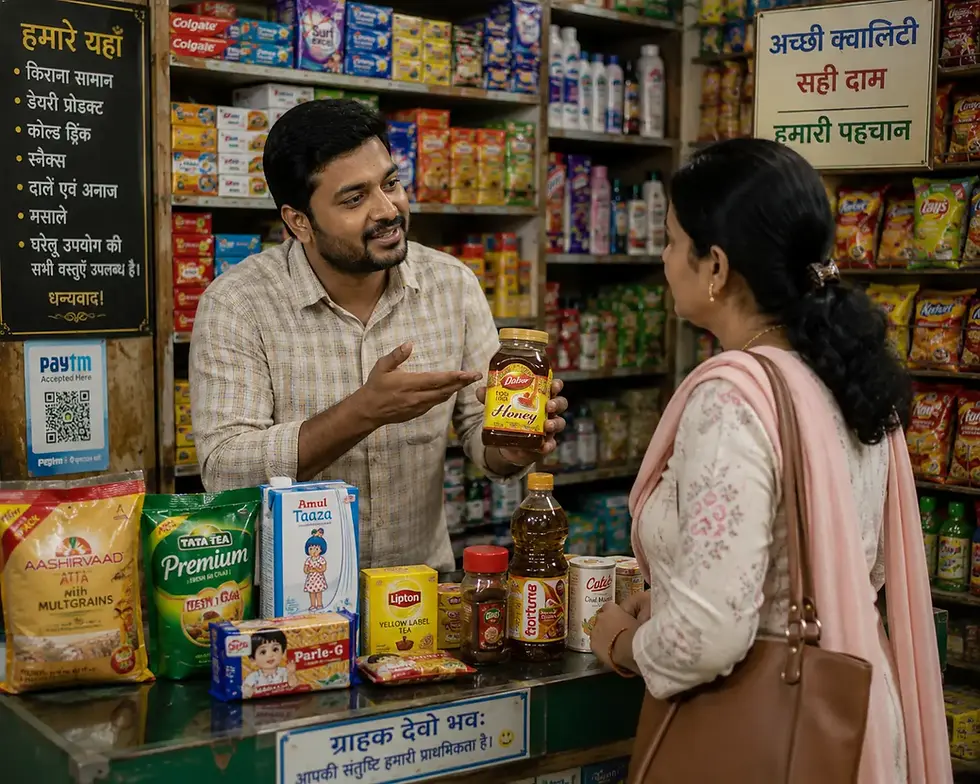
Walk into a small Indian shop twice, and there’s a good chance the owner remembers you.
Not just your face.
Your habits. Your budget. Your family. Your usual choices. And strangely, that changes everything. You don’t feel like a customer anymore. You feel known. That feeling is powerful in sales. A local shopkeeper may ask:
“Your father liked the stronger tea leaves, right?”
“Your son’s school reopened?”
“You usually buy the bigger packet near month-end.”
These are not random conversations. They are emotional bridges.
Most modern businesses try to build customer relationships using software.Indian shopkeepers built them through memory, observation, and daily human interaction. And maybe that’s why many people still trust local stores more than giant brands.
Because people don’t only buy products. They buy familiarity.
The Shopkeeper Studies Human Nature Quietly
A good Indian shopkeeper notices things without making it obvious.
He notices:
who hesitates before checking price
who buys emotionally
who values durability
who likes respect more than discounts
who comes only during salary week
who never leaves without negotiating
Over time, the selling style changes according to the person. One customer gets jokes.Another gets patience.Another gets quick service. This is not manipulation. It is social intelligence. And honestly, many corporate sales teams still don’t understand this level of personalisation.
Essential Lists For Sales Person : https://amzn.to/4ag16l4
The Real Reason Customers Return
People think customers return because of low prices.
That’s only partially true.
Customers return where they feel comfortable.
The kirana store owner who says:“Pay later.”
The medical store owner who keeps your regular medicine ready.
The saree seller who remembers your mother’s preference.
These things create emotional loyalty.
And emotional loyalty is difficult to replace.
A supermarket may offer discounts.But it cannot easily recreate emotional familiarity.
Indian Selling Is Built on Timing
Indian shopkeepers understand emotional timing naturally.
Before festivals, weddings, school reopening, or family events, their recommendations change.
Suddenly the conversation becomes:“This is good for gifting.”
“This color works in wedding season.”
“Children usually prefer this design now.”
The product stays the same.
But the emotional context changes.
That is real-world sales psychology hidden inside ordinary conversations.
The Difference Between Helping and Pushing
The smartest shopkeepers rarely sound desperate.
They suggest.
They guide.
They make the customer feel smart while buying.
And that changes resistance completely.
Nobody likes being pushed.
But everybody likes feeling understood.
That’s why the best salespeople often sound less like salespeople and more like trusted advisors.
What Modern Sales Can Learn From This
Today businesses collect massive customer data:
browsing history
clicks
demographics
spending patterns
But many customers still feel emotionally disconnected.
Why?
Because information alone does not create relationships. Human attention does.
Indian shopkeepers succeed because customers feel:
seen
remembered
respected
And when trust enters the conversation, selling becomes easier.
Final Thought
Somewhere in a small Indian market, a shopkeeper with no MBA, no CRM software, and no corporate sales training is quietly outperforming modern sales strategies.
Not because he knows better scripts.
Because he understands people better.
And maybe that is the oldest sales lesson of all:
The customer stays where they feel personally valued.
Essential List for Sales person : https://amzn.to/4ag16l4


Comments